Self-Healing Data: Agentic Frameworks for Quality
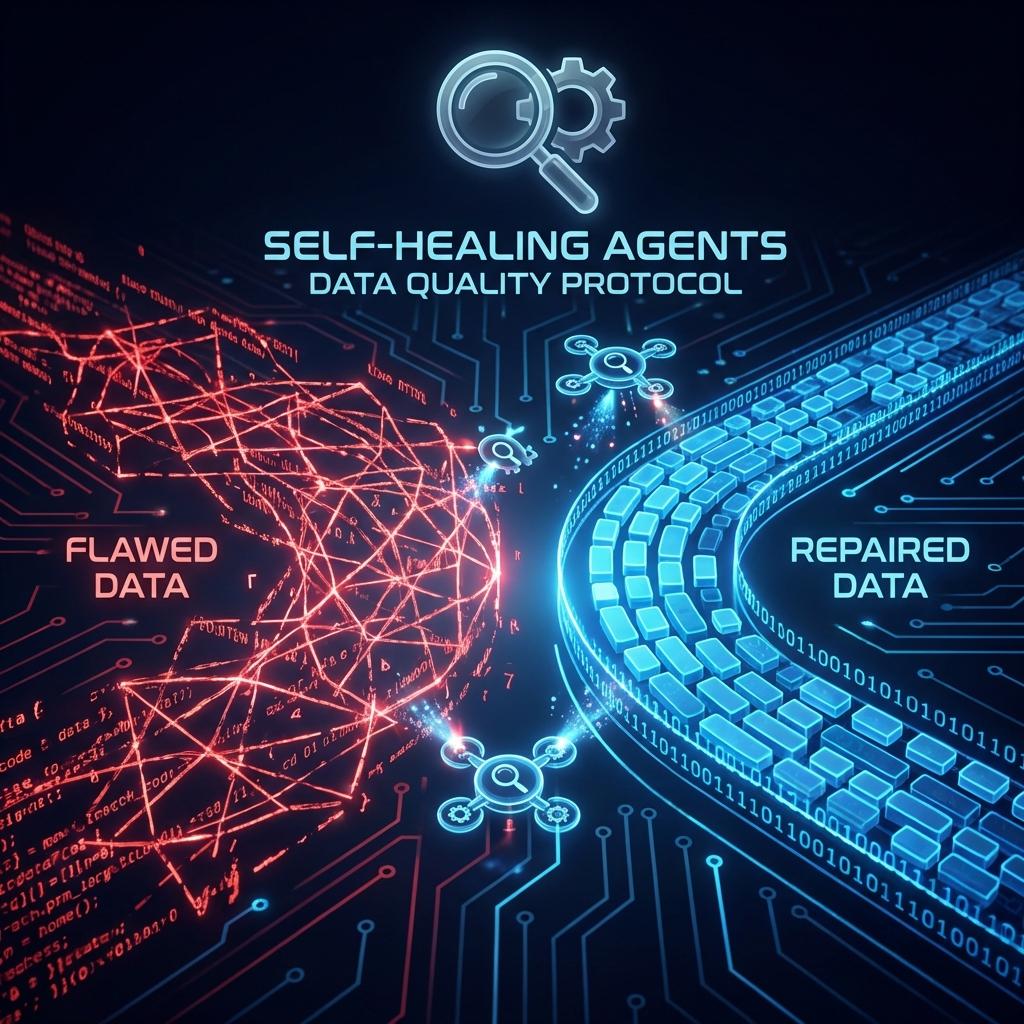
Traditional Data Quality (DQ) management is reactive and rule-based. "If field A is empty, flag error." In the age of Agentic AI, we are moving towards Autonomous Data Quality—systems that not only detect errors but understand context and self-correct.
The Limits of Rule-Based Logic
Standard SAP Information Steward rules are static. They catch obvious formatting errors but miss semantic inconsistencies. They flag duplicate customers, but they can't tell you that "IBM" and "International Business Machines" are the same entity without explicit fuzzy logic programming.
The Agentic DQ Framework
An Agentic Data Quality framework employs AI agents that monitor data streams continuously. Unlike passive rules, these agents:
- Contextual Understanding: Using LLMs to understand unstructured text in note fields to populate structured data attributes.
- Cross-System Validation: Autonomously checking external public registries (like D&B or tax authorities) to validate vendor data without human intervention.
- Probabilistic Correction: Instead of just flagging an error, the agent proposes a correction with a confidence score. "I am 99% sure this address postcode is incorrect based on the city; auto-correcting."
From Gatekeeper to Gardener
Traditional DQ teams act as gatekeepers, stopping bad data. Agentic DQ acts as a gardener, constantly tending to the dataset, pruning inconsistencies, and nurturing data health in the background.
Conclusion
Data is the fuel for AI, but bad data is kryptonite. By deploying Agentic Frameworks for Data Quality, organizations ensure their SAP systems run on high-octane, trustworthy information, enabling true data-driven decision making.
Preparing for the future?
Let's discuss how we can help your enterprise evolve.